Solving the Caregiver Recruitment Crisis: The Data, Economics, and Operational Fix
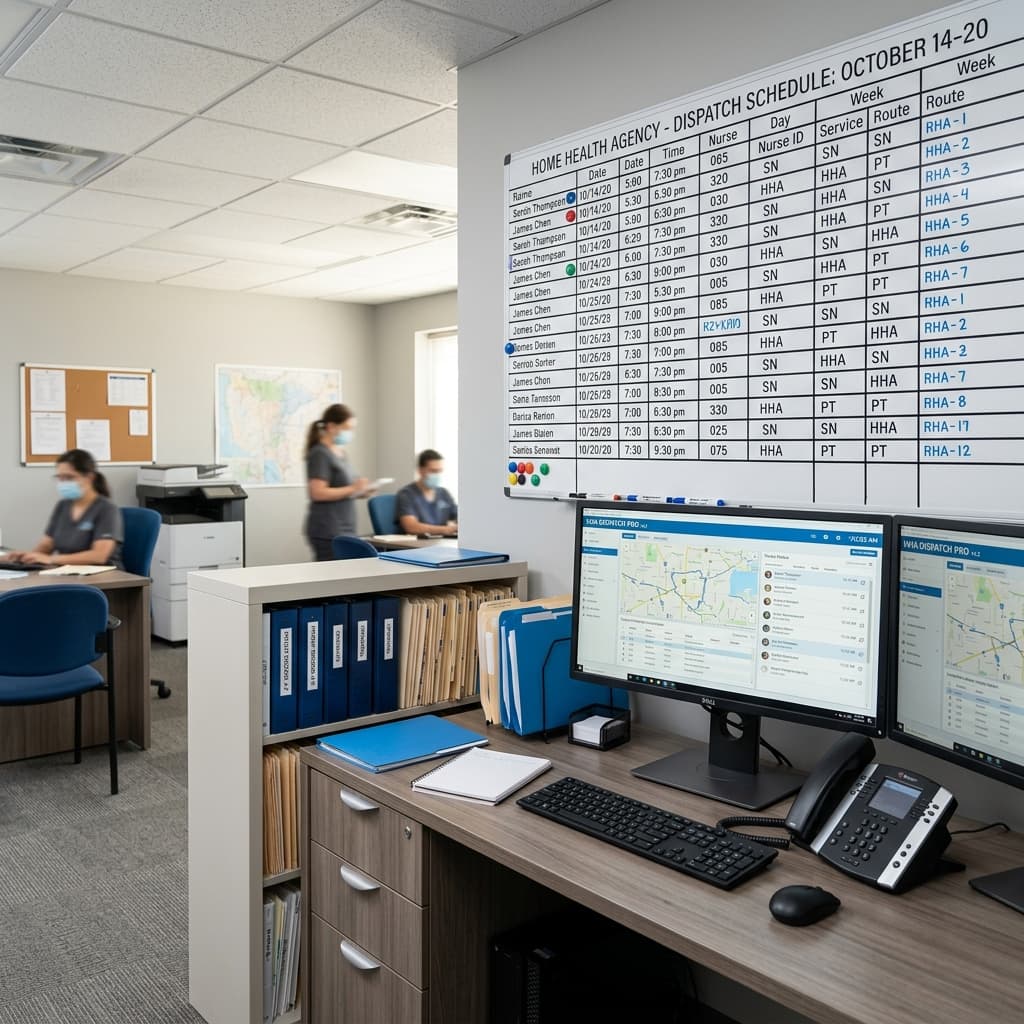
"Finding and keeping qualified caregivers is our biggest challenge." Across thousands of home care agencies, hospice providers, and assisted living operators in the United States, this complaint is voiced at nearly every board meeting and executive briefing.
Yet most agency owners and clinical operators treat caregiver staffing as an uncontrollable macroeconomic weather event. They blame wage inflation, government subsidies, or generational shifts in work ethic.
The benchmark data paints an entirely different picture. The caregiver shortage is real, but the acute staffing crisis experienced by individual providers is fundamentally an operational and economic failure. Agencies spend thousands of dollars buying job board clicks, only to lose 60 percent of their applicant volume to delayed response times and lose more than half of their newly hired aides within their first 90 days of employment.
This guide breaks down the verified benchmarking data from Home Care Pulse (HCP), models the true balance-sheet cost of caregiver turnover, and delivers an operational blueprint for building a resilient, high-retention direct care workforce.
1. The Hard Economics of Caregiver Turnover
According to the Home Care Pulse Benchmarking Report, the median national caregiver turnover rate sits at 77.1 percent, with bottom-quartile agencies experiencing turnover exceeding 90 percent.
+-----------------------------------------------------------------------------------+
|                        THE REAL COST OF CAREGIVER TURNOVER                        |
+--------------------------+----------------------------+---------------------------+
| Expense Category         | Low-Cost Market (Midwest)  | High-Cost Market (Coast)  |
+--------------------------+----------------------------+---------------------------+
| Job Board & Ad Sourcing  | $450 - $750                | $800 - $1,400             |
| Recruiter Screening Time | $350 - $550                | $500 - $850               |
| Background Checks & TB   | $120 - $220                | $180 - $350               |
| Paid Orientation & Onbd  | $400 - $650                | $650 - $1,100             |
| Administrative Overhead  | $300 - $450                | $450 - $750               |
+--------------------------+----------------------------+---------------------------+
| Direct Replacement Cost  | $1,620 - $2,620 per seat   | $2,580 - $4,450 per seat  |
+--------------------------+----------------------------+---------------------------+
| Hidden Cost: Lost Hours  | $3,500 - $7,000 per open case over a 30-day vacancy     |
+--------------------------+----------------------------+---------------------------+
The $250,000 P&L Leak
Consider an average-sized private duty home care agency operating with 100 active caregivers:
- At a 75% annual turnover rate, the agency must hire and onboard 75 new caregivers every year simply to maintain a flat headcount.
- At a conservative direct replacement cost of $3,000 per caregiver, the agency expends $225,000 annually in non-recoverable recruiting, credentialing, and orientation costs.
- Add in lost billable hours (cases that go unserved or are rejected due to lack of staff), and the true financial drag routinely exceeds $400,000 per year against the agency's bottom line.
Every dollar wasted on churn friction is a dollar unavailable for competitive wage differentials, clinical coordination, or owner distributions.
2. Where the Funnel Breaks: The 4 Root Causes of Recruitment Failure
When evaluating failing recruitment funnels, agencies consistently break down across four operational chokepoints:
Chokepoint 1: The Speed-to-Contact Collapse
The direct care labor market operates in real-time. Caregivers searching for work submit applications to three to five agencies simultaneously.
- The 15-Minute Rule: Industry data proves that when an agency contacts a caregiver applicant within 15 minutes of application, the interview show-up rate exceeds 72 percent.
- The 24-Hour Cliff: If the agency waits 24 hours to initiate contact, the response rate plummets below 28 percent. By Day 3, the candidate has already accepted an orientation slot with a competing agency.
Chokepoint 2: Credentialing and Screening Lag
In states requiring formal fingerprint clearance, background checks through state health registries, and multi-step tuberculosis (TB) testing, the time-to-first-shift stretches from 14 to 28 days. Caregivers living paycheck to paycheck cannot afford a two-week unpaid gap between interview and Day 1 orientation. If your agency cannot get a compliant caregiver onto an active shift within 5 business days, they will accept a non-healthcare role in retail or hospitality simply for immediate income.
Chokepoint 3: Commute Friction and Route Geometry
Caregivers are disproportionately sensitive to fuel costs and transit times. Offering an aide $18 per hour for a 4-hour shift that requires a 45-minute unpaid drive each way yields an effective wage of less than $13 per hour once fuel and vehicle depreciation are factored in. Agencies that fail to cluster clients geographically experience immediate shift call-offs and early resignation.
Chokepoint 4: The 90-Day Orientation Drop-Off
HCP benchmarks confirm that 57 percent of all caregiver resignations occur within the first 90 days of hire. The primary driver is not the hourly wage: it is schedule inconsistency. Agencies promise candidates 35 to 40 hours per week during interviews, but place them on 15 hours during Week 1 while waiting for client matching. The caregiver panics, feels misled, and immediately resumes their job search.
3. The 5-Point Operational Blueprint: Building a High-Retention Workforce
To break the churn cycle, home care and senior living operators must replace fragmented recruiting habits with a disciplined, data-driven workforce architecture:
+-----------------------------------------------------------------------------------+
|                     THE 5-POINT CAREGIVER RETENTION PROTOCOL                      |
+-------------------+---------------------------------------------------------------+
| Pillar 1          | Instant Inbound Engagement (Under 15-Minute Automated Intake) |
+-------------------+---------------------------------------------------------------+
| Pillar 2          | Rapid Credentialing Pipeline (5-Day Time-to-Shift Standard)   |
+-------------------+---------------------------------------------------------------+
| Pillar 3          | Geographic Route Clustering (Sub-7-Mile Caregiver Radius)     |
+-------------------+---------------------------------------------------------------+
| Pillar 4          | Guaranteed Hours & 90-Day Milestone Bonus Architecture        |
+-------------------+---------------------------------------------------------------+
| Pillar 5          | Clinical Laddering & Healthcare Career Progression Pathways   |
+-------------------+---------------------------------------------------------------+
Pillar 1: Automated Intake and Instant Scheduling
Deploy automated SMS workflows integrated with your Applicant Tracking System (ATS). The moment an applicant submits a form:
- An automated SMS acknowledges receipt within 60 seconds.
- Two basic qualification questions are screened (driver's license status and weekend availability).
- Qualified applicants immediately receive an interactive self-scheduling calendar link for a same-day phone screen.
Pillar 2: Agency-Sponsored Accelerated Credentialing
Remove cash flow barriers for candidates. Partner with local occupational health clinics for walk-in QuantiFERON blood tests (which provide single-visit TB clearance in 24 hours, replacing 4-visit skin tests). Subsidize state background fees upfront. Compressing the pre-hire clearance window from 14 days down to 4 days directly recovers 35% of otherwise lost applicant volume.
Pillar 3: Route Clustering and Zone Staffing
Group your client census into tightly bounded geographic operational zones (5 to 7-mile radiuses). Assign dedicated caregiver pools to specific zones rather than dispatching staff across entire metropolitan markets. This eliminates unpaid windshield time, cuts call-offs by more than 40%, and enables quick emergency shift coverage when an aide calls in sick.
Pillar 4: The 90-Day Milestone Bonus Framework
Rather than offering an upfront $1,000 sign-on bonus (which attracts transient workers who depart immediately after payout), structure a graduated milestone bonus funded by saved turnover capital:
- Day 30 Milestone: $250 bonus upon completing 120 shift hours with zero unexcused tardiness.
- Day 60 Milestone: $250 bonus plus an automatic $0.50/hr wage adjustment.
- Day 90 Milestone: $500 bonus plus eligibility for the agency's Guaranteed Hours program.
By tying payouts to the high-risk 90-day window, you incentivize stability during the exact period where turnover typically spikes.
Pillar 5: Career Laddering into Licensed Clinical Roles
The most ambitious caregivers do not want to remain personal care aides permanently. Leading agencies build clinical ladders that sponsor Certified Nursing Assistant (CNA), Medication Aide (CMA), and Home Health Aide (HHA) certifications in exchange for an agreed employment commitment. Sponsoring aides into clinical training transforms high-turnover entry-level seats into a feeder pipeline for skilled nursing and supervisory roles.
4. Leadership Accountability: Why Staffing Begins with Executive Search
Caregiver recruitment cannot be delegated solely to an entry-level HR coordinator. Clinical workforce stability is directly tied to the competence of your executive leadership:
- The Director of Nursing (DON): If your Director of Nursing views scheduling as purely an administrative burden rather than a core clinical retention discipline, nurse-caregiver friction will drive away top talent.
- The Agency Administrator: Executive leadership must hold recruiters accountable to conversion metrics: speed-to-contact, interview-to-hire ratio, and 90-day retention rates, rather than vanity metrics like total resumes received.
When an agency suffers from systemic staffing instability, the diagnosis almost always points to executive leadership misalignment.
Frequently Asked Questions
What is the average hourly wage for home care caregivers in 2026?
According to Bureau of Labor Statistics (BLS) and industry compensation reports, the national median base wage for home care aides and personal care aides ranges between $16.50 and $19.50 per hour. In high-cost coastal markets (California, New York, Washington, Massachusetts), competitive entry rates range between $21.00 and $24.50 per hour. Fully burdened labor costs (including payroll taxes, workers' compensation, and administrative overhead) typically run 1.25x to 1.35x base wages.
How does Medicaid reimbursement rate pressure affect caregiver recruitment?
Medicaid fee-for-service and managed care organizations set reimbursement caps for personal care services (PCS), often ranging from $24 to $34 per billable hour depending on the state. Because agency gross margins must cover mandated employer taxes, mandatory overtime, workers' comp premiums, and operational overhead, agencies dependent on Medicaid often face compressed wage ceilings that make competing against hospital systems or private-pay providers difficult.
What is the single most effective lever for reducing 90-day caregiver turnover?
Schedule predictability and consistent hours. Research shows that caregivers leave primarily when promised hours fail to materialize or when schedules change erratically with minimal notice. Agencies that implement a "Guaranteed Hours" program (guaranteeing 30 to 35 paid hours per week to top-performing aides) consistently reduce 90-day churn by more than 40 percent.
How does Electronic Visit Verification (EVV) impact caregiver retention?
Mandated under the 21st Century Cures Act, EVV requires GPS or telephony verification for in-home care delivery. Poorly configured EVV software that crashes, requires cumbersome logins, or generates false clock-in errors creates immense frustration for frontline aides. Providers must select intuitive mobile EVV applications and provide thorough paid training during orientation to prevent administrative burnout.
Are chronic staffing vacancies impacting your agency's capacity to accept new home health or hospice referrals? Connect with our healthcare executive search practice to recruit transformational clinical leadership capable of stabilizing your workforce.
Related Executive Playbooks
The Cost of a Vacant Director of Nursing: P&L Economics and Clinical Retention
Why an empty Director of Nursing seat burns $1,400 to $2,800 daily. The true P&L cost of DON turnover, state survey risks, and a 14-day leadership triage protocol.
CNO vs. VP of Nursing: Key Differences in Healthcare Leadership
Understand the critical differences in scope, board governance, regulatory accountability, and compensation between a Chief Nursing Officer and a Vice President of Nursing.
Controller vs. CFO: When Growing Companies Must Upgrade Financial Leadership
The critical differences between a Corporate Controller and a Chief Financial Officer. Revenue triggers, debt covenant complexities, and 2026 compensation benchmarks.