AI Recruitment for Home Health
Replace Staffing Agency Dependency
Definition
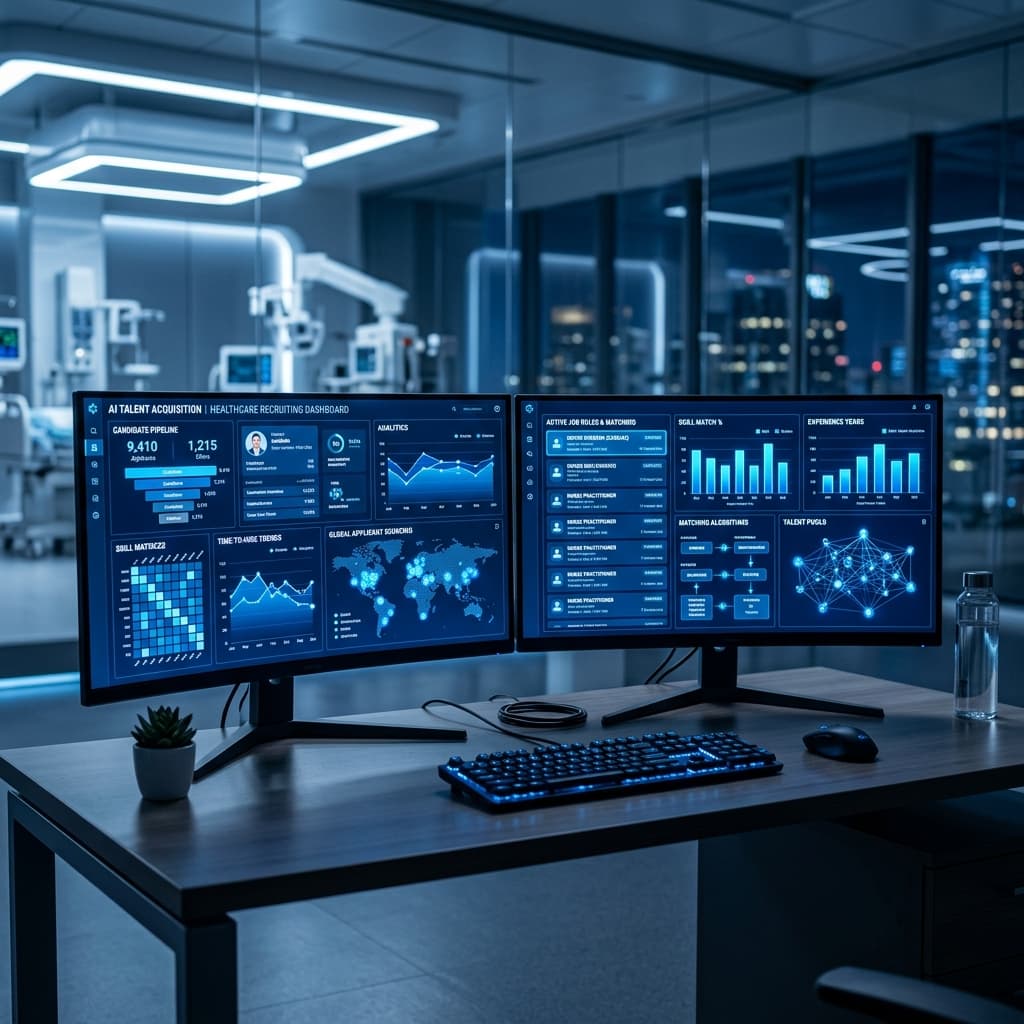
What is AI recruitment for home health? AI recruitment for home health applies machine learning, conversational automation, and predictive analytics to the caregiver hiring process. Instead of manual resume screening and phone outreach, AI-powered tools identify qualified candidates, initiate contact, collect documentation, and schedule interviews at scale, enabling agencies to reduce their dependence on expensive staffing intermediaries.
When combined with a targeted direct-hire strategy from home health recruiting specialists, AI infrastructure eliminates the structural cost disadvantage that chronic agency dependency creates for home-based care operators.
Why Home Health Needs AI Recruiting Now
The economics of home health staffing are under structural pressure. Direct care worker wages have risen sharply. Staffing agency markups average 40-75% above the base wage. Regulatory scrutiny on overtime compliance has increased. Meanwhile, applicant response rates on traditional job boards have declined as the candidate market has tightened.
The result is a sector where hiring costs have risen faster than reimbursement rates, squeezing margins at a time when demand for in-home care services is accelerating. AI recruiting infrastructure does not eliminate the challenge, but it materially changes the cost structure of finding and onboarding qualified caregivers.
⚡
3x Faster Applicant Engagement
AI tools engage applicants within minutes of application, before they complete the process at a competing employer.
📉
60% Lower Cost Per Hire
Direct AI-sourced hires eliminate the agency markup layer entirely, reducing blended per-hire costs dramatically.
🕐
24/7 Screening Operations
Conversational AI collects documentation and schedules interviews outside business hours when most caregivers are available.
📋
Automated Credential Verification
Real-time license and certification checks catch compliance issues before the offer stage rather than during onboarding.
The Mechanics of AI-Powered Recruiting

AI recruiting platforms handle the high-volume, time-sensitive tasks that human recruiters cannot execute at scale. Understanding exactly what these tools do clarifies where they add value and where human judgment remains essential.
Candidate Matching and Ranking
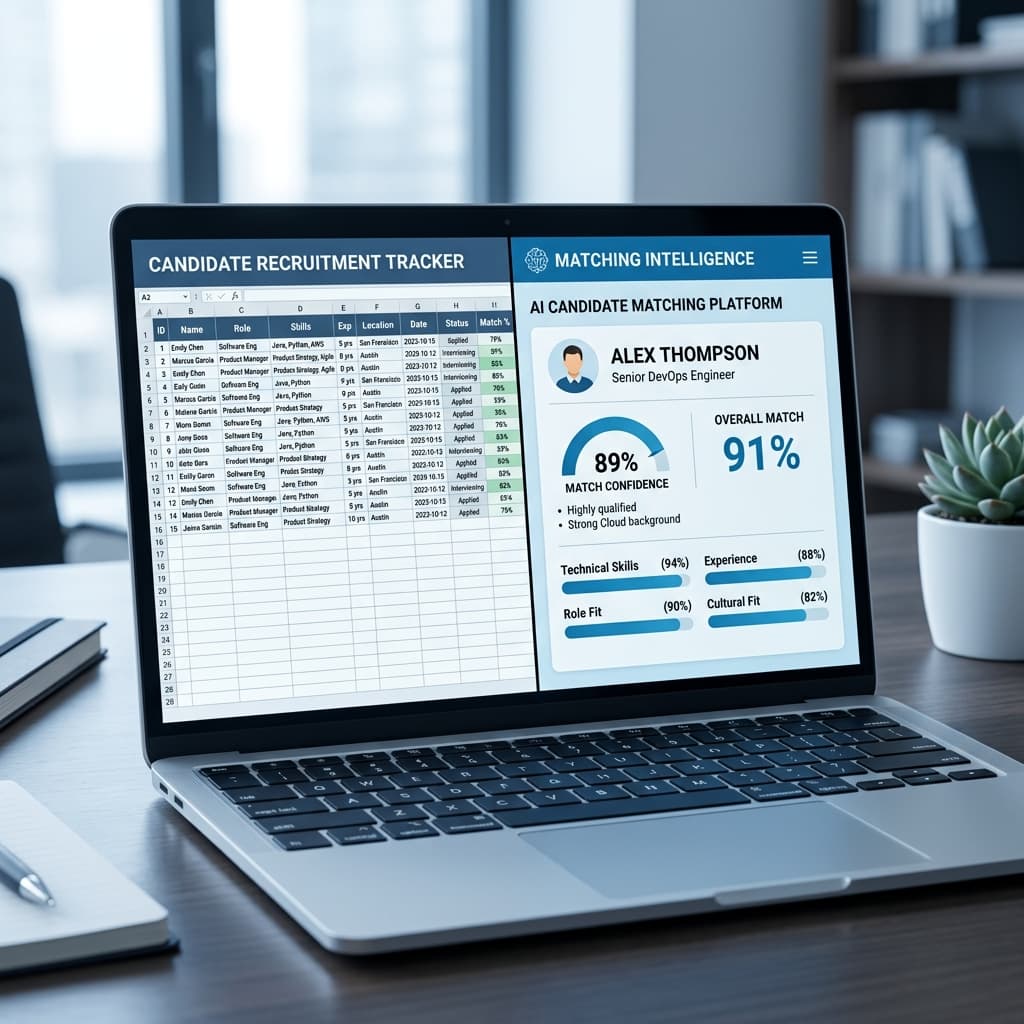
Machine learning models trained on successful placement data rank applicants based on credential match, geographic proximity, schedule availability, and historical retention signals. The result is a prioritized candidate queue rather than a stack of unfiltered applications.
Conversational Screening
SMS and messaging-based chatbots conduct initial screening conversations with applicants, collecting availability, certification status, transportation access, and compensation expectations. These exchanges happen within minutes of application submission, capturing candidates before they move to the next offer.
Automated Scheduling
Self-scheduling tools allow qualified candidates to book interview slots without human coordination, eliminating the back-and-forth that extends time-to-interview by days in many agencies. Candidates who can control their own scheduling timeline are significantly more likely to complete the interview process.
Predictive Retention Scoring
Advanced platforms apply predictive models to estimate 90-day and 180-day retention probability based on candidate profile characteristics correlated with long-tenure employees in similar roles. This capability helps hiring managers prioritize candidates with higher likelihood of staying past the guarantee period.
Comparison: AI Tools vs. Traditional Staffing Agencies
| Dimension | Traditional Staffing Agency | AI Recruiting Platform |
|---|---|---|
| Cost structure | 40-75% markup on wages | Flat SaaS fee + direct wages |
| Time to first candidate | 3-7 days | Hours to 24 hours |
| Operating hours | Business hours only | 24/7 automated engagement |
| Credential verification | Variable, often manual | Real-time automated check |
| Relationship quality | High (human-led) | Lower without human layer |
| Scale capacity | Limited by headcount | Near unlimited |
| Retention accountability | Variable guarantee terms | No placement guarantee |
| Niche placements | Strong for specialized roles | Weaker without human judgment |
The optimal model combines AI infrastructure for volume sourcing with human expertise for clinical role evaluation and leadership placement.
Implementing AI Recruiting in Your Home Health Agency
Technology implementation without process clarity produces expensive software that no one uses effectively. The agencies with the strongest AI recruiting outcomes share a common implementation pattern: they defined their workflow before selecting a platform, not after.
Audit Your Current Funnel
Map where candidates are entering, where they are dropping off, and how long each stage takes. This baseline makes the value of automation measurable.
Select Platform by Workflow Fit
Not every AI recruiting platform serves home health well. Evaluate tools specifically designed for high-volume care worker hiring, with CNA and HHA credential modules built in.
Configure Screening Logic
The screening questions and disqualification logic must reflect your specific operational requirements: geography, schedule availability, licensure level, and transportation status.
Integrate with Your ATS
Standalone AI tools create data silos. Confirm integration capability with your existing applicant tracking system before committing to a platform.
Layer Human Judgment at Key Stages
AI handles volume. Humans evaluate character, judgment, and clinical orientation. Design your process so human reviewers engage at the interview stage with pre-qualified, pre-screened candidates.
Engaged Headhunters helps home health agencies evaluate their recruiting infrastructure and identify where healthcare recruiting expertise combined with technology adoption can produce the fastest cost-reduction results. Schedule a call to discuss your agency's current state.
Frequently Asked Questions
Will recruitment agencies be replaced by AI?
Full replacement is unlikely in the near term. AI automates screening, scheduling, and follow-up, but agencies still provide value in niche placements and relationship-driven outreach. Organizations with robust AI infrastructure will depend on agencies far less, reducing per-hire costs.
How does AI improve home health hiring?
AI addresses the primary bottlenecks in home health hiring: unresponsive applicants, manual credential checks, and scheduling conflicts. Conversational automation, real-time verification, and self-scheduling tools operate outside business hours, dramatically accelerating applicant engagement.
How much does an AI recruiter cost?
Pricing varies widely. Entry-level AI recruiting platforms start near $500 per month, while enterprise solutions with full ATS integration and compliance modules can exceed $3,000 per month. Most vendors offer tiered pricing based on user count or hire volume.
Build the Recruiting Infrastructure to Break Agency Dependency
Talk to James about pairing AI recruiting infrastructure with direct-hire sourcing to reduce your per-hire cost and build a sustainable caregiver pipeline.